Post by Peter Shirts
Music and Dance Librarian, Emory University
Co-chair, MLA Legislation Committee
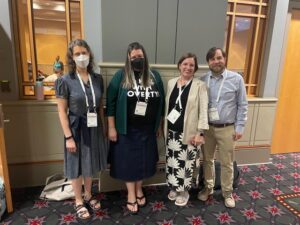
Members of MLA’s Legislation Committee presented at the American Library Association’s 2025 Annual Meeting in Philadelphia on June 28, 2025. Kathleen DeLaurenti, Amy Hunsaker, Kerry Masteller, and Peter Shirts presented “Solving Technical, Legal and Copyright Issues in Born-Digital Collecting from Independent Creators” to a crowd of interested librarians despite being cross-programed against the recently fired Librarian of Congress, Dr. Carla Hayden.
The presentation examined the many issues libraries must solve to collect born-digital materials, especially audiovisual materials, limiting examples to independent born-digital creators since larger publishers are often hostile to libraries collecting their born-digital content. E-scores, e-books, digital sounds recordings, digital play scripts, and digital films are very fragile from a preservation standpoint, especially works produced outside of the well-known ecosystem of traditional publishers. Often, these independent artists are excluded or exclude themselves from the publisher ecosystem because of perceived unpopularity or racial (or other) bias or because of the predatory practices of Big Tech. While this type of collecting is difficult with many roadblocks, libraries should not abdicate the core function of purchasing and preserving cultural history.
The presentation gave a preview of Kathleen and Kerry’s forthcoming report based on conversations they had with librarians in Fall 2024; they found that library users expect libraries to purchase digital scores, recordings, and video. They also heard about multiple disparate workflows for this type of collecting, often limited by small budgets and staff, along with creators who were baffled by the process of having libraries purchase their digital work. Further, library digital systems were not often designed with audiovisual content as a priority. The lack of First Sale and library ownership for digital content makes collecting even harder, so libraries need to consider complicated licensing language that may not allow the very uses library users expect. Sometimes, creating physical surrogates may be the best way to store these born-digital items, depending on the license terms. We should support groups and lawmakers working to make digital sale easier for libraries.
The presentation also gave examples of how Emory University, Johns Hopkins University, and the University of Virginia have acquired and provided access to born-digital materials from independent artists; most of these acquisitions involved time-consuming agreements on licensing terms, though often these processes sped up with additional purchases. Ultimately, librarians interested in digital collecting should be proactive about socializing and normalizing digital collecting with creators, library users, and their own (perhaps reticent) library staff. Making connections with other librarians doing similar work is also important to changing the culture around digital collecting.